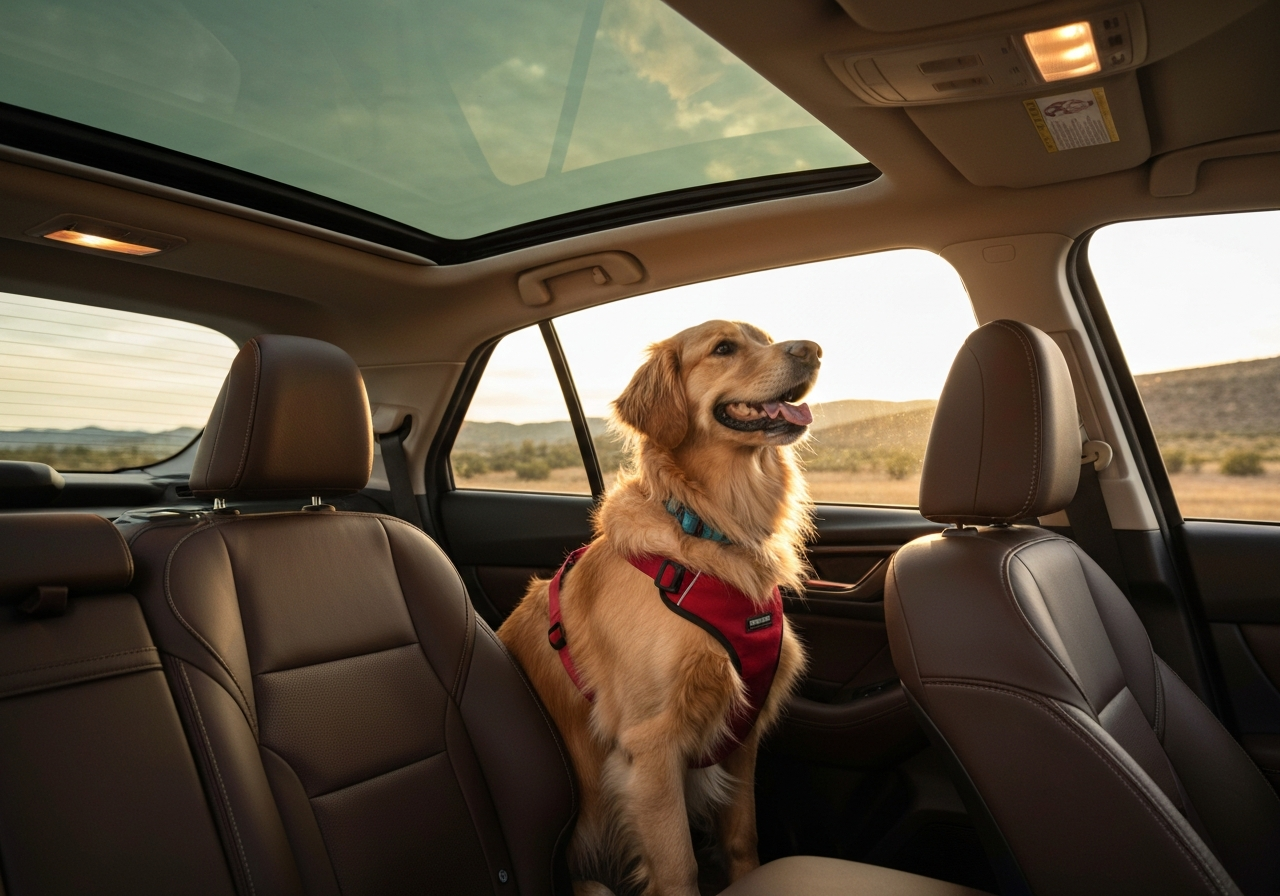
A well-prepared pet road trip means a safer, calmer, more enjoyable journey for everyone — two-legged and four-legged alike. But an unrestrained pet in a moving car is a genuine hazard: a danger to itself, a distraction to the driver, and a risk to every passenger in a sudden stop. The good news is that keeping your pet safe on a long drive comes down to a handful of simple, sensible steps. Plan ahead, restrain them properly, take regular breaks, and pack the essentials, and you'll both arrive happy.
Why pet safety in the car is non-negotiable
It's easy to picture a dog with its head out the window as the image of a happy road trip, but an unsecured pet is one of the most overlooked dangers on the road. In a crash or even a hard brake, an unrestrained animal becomes a projectile — capable of serious injury to itself and to the people in the car. Even short of a collision, a loose pet that climbs into your lap, blocks your view, or steps on the controls is a real distraction. Securing your pet protects everyone, and it's the foundation everything else builds on.
Restrain your pet properly
The single most important step is keeping your pet secured for the entire drive. The best method depends on your pet and your vehicle, but every good option keeps the animal contained and prevents it from roaming the cabin. For many dogs, a crash-tested safety harness that clips into the seatbelt is the simplest solution — it lets them sit or lie down comfortably while staying restrained.
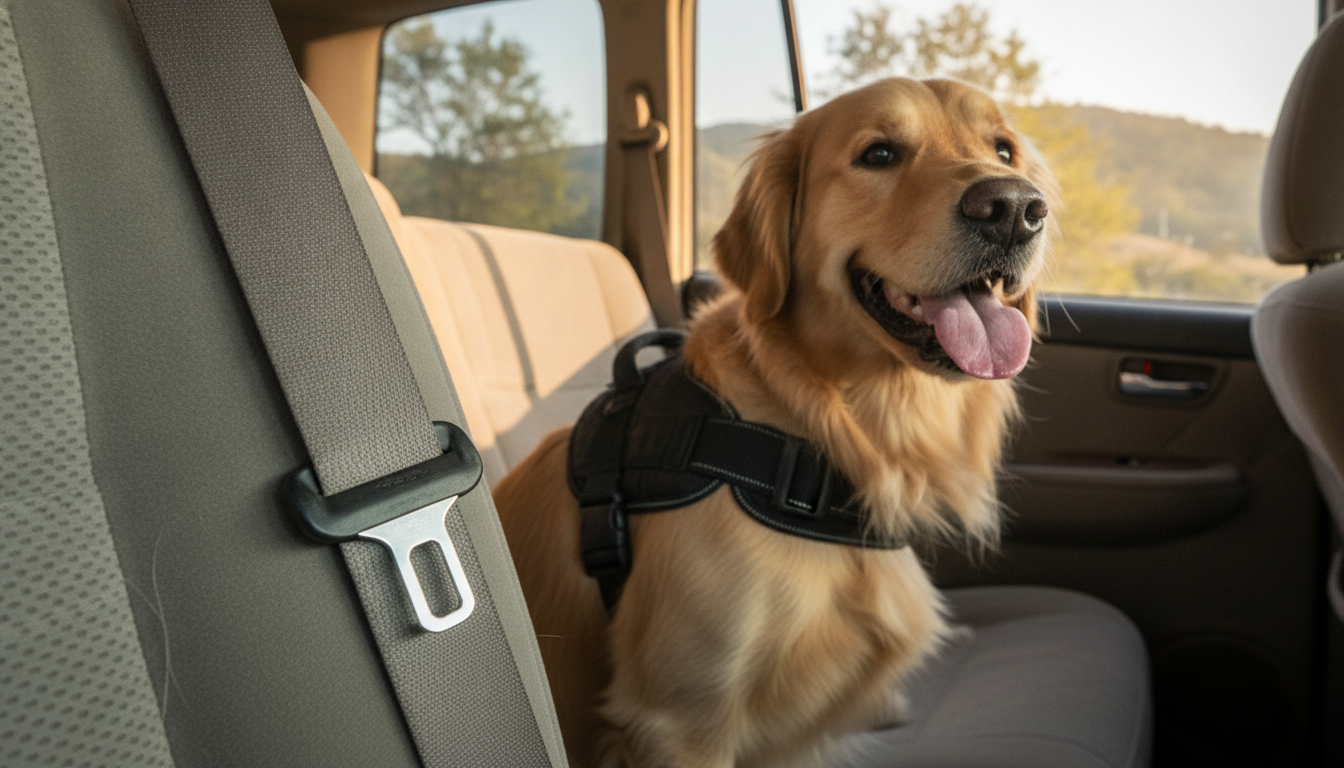
Whatever you choose, the back seat or cargo area is safer than the front, where an airbag can seriously injure a pet. Never let your pet ride loose in the front seat, and resist the urge to hold a small pet in your lap while driving — it's dangerous for both of you.
Crates and carriers for the cargo area
For cats and many dogs, a secured travel crate or carrier is the gold standard. A sturdy crate keeps your pet contained, gives them a familiar den-like space that reduces anxiety, and offers real protection in a crash — as long as the crate itself is anchored so it can't slide or tumble. In an SUV or wagon, a well-secured crate in the cargo area is an excellent setup; a cargo barrier adds another layer of protection for larger dogs.
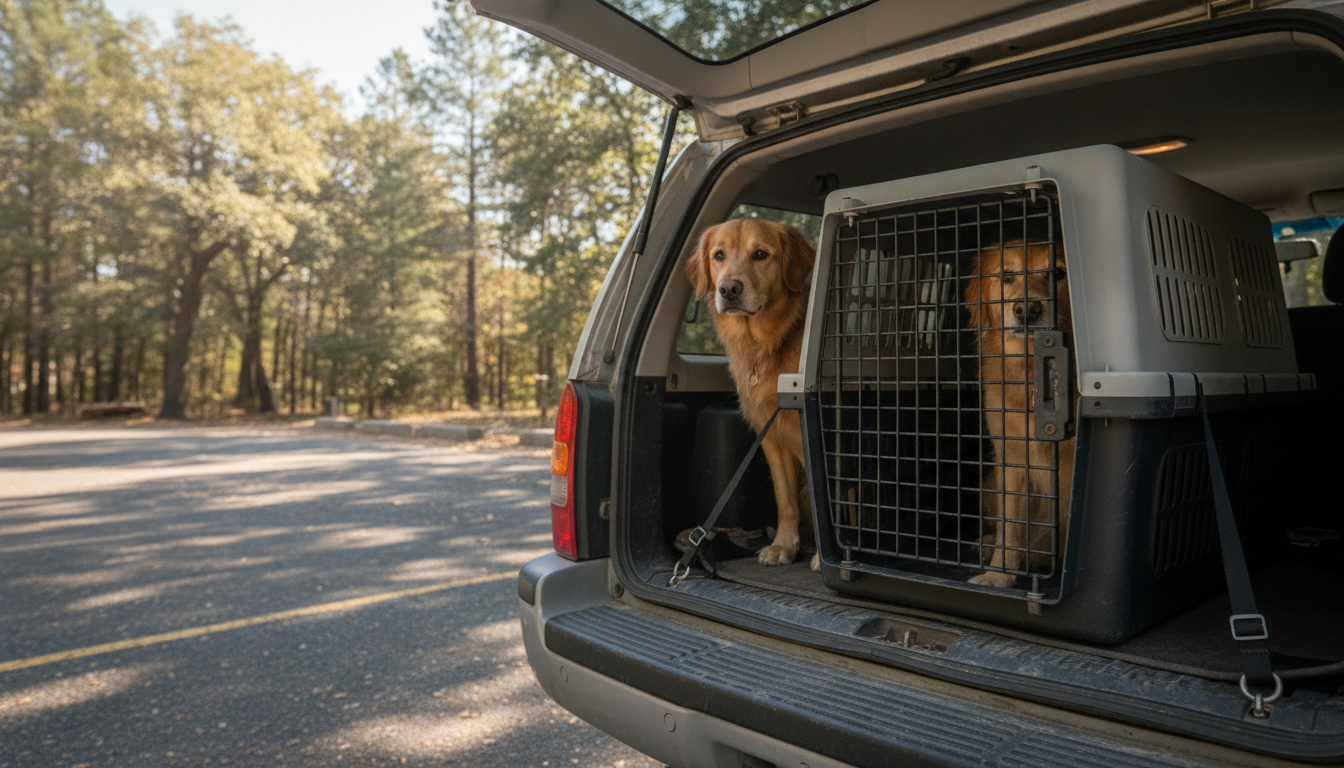
Make sure any crate is large enough for your pet to stand, turn around, and lie down, and that it's well ventilated. If your pet isn't used to a crate, introduce it at home well before the trip so it feels safe, not like a punishment.
Keep heads and paws inside
As much as dogs love it, letting them hang their head out the window isn't safe. Road debris, insects, and dust can injure their eyes and ears, and a pet leaning out can lose its balance or, worse, fall or jump. Keep windows up far enough that your pet stays fully inside, and use the window locks so an excited paw can't lower the glass.
Take frequent breaks
Pets need to stretch, relieve themselves, and reset just like you do. Plan to stop every couple of hours to let your pet out — on a leash, always — for a short walk and a bathroom break. These pauses keep your pet comfortable, reduce anxiety, and prevent accidents, and they're good for the driver's alertness too.
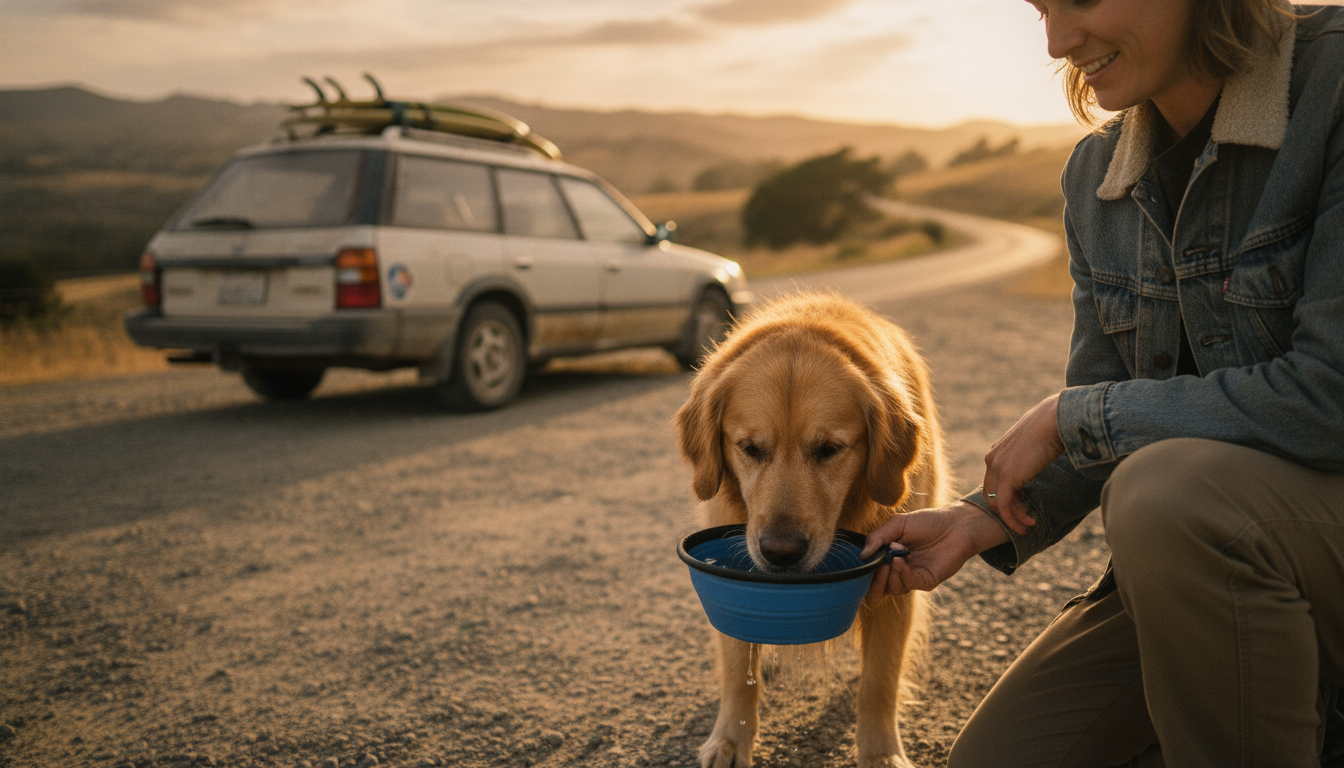
Always leash your pet before you open the door at an unfamiliar rest stop — strange surroundings and rushing traffic can spook even a well-behaved animal. A frightened pet bolting in a parking lot is exactly the scenario these precautions prevent.
Hydration and food
Bring plenty of fresh water and offer it at every break to keep your pet hydrated, especially in warm weather. A collapsible travel bowl makes this easy. Feed lighter than usual on travel days and try to feed during stops rather than while moving, since a full stomach in a moving car can lead to motion sickness. Pack enough of your pet's regular food for the whole trip — a sudden diet change on the road can upset their stomach.
Never leave a pet in a parked car
This one is life-or-death: never leave your pet alone in a parked car, especially in warm weather. The temperature inside a car can climb to dangerous, even fatal levels within minutes, even on a mild day and even with the windows cracked. Cold weather is dangerous too. If you need to stop somewhere your pet can't come, make sure someone stays with them in a climate-controlled car, or plan pet-friendly stops instead. There is no safe amount of time to leave a pet in a hot car.
Room for the whole family
Find a pet-friendly used car for your adventures.
Tell us what you need and we'll send hand-picked used-car deals near you — the space and features for road trips with pets, at prices below the lot.
Get Used-Car DealsPack a pet road-trip kit
A little packing prevents a lot of stress. Put together a pet kit with: food and a travel bowl, water and a collapsible bowl, a leash and waste bags, any medications, a familiar blanket or toy for comfort, a pet first-aid kit, cleaning supplies and towels for messes, and copies of your pet's vaccination and medical records (useful if you need a vet on the road). Having it all in one bag means you're never scrambling at a rest stop.
Help anxious or carsick pets
Not every pet is a natural traveler. If yours gets anxious or carsick, prepare in advance. Take a few short practice drives before the big trip so the car feels familiar. Keep the cabin cool and well ventilated, and don't feed a large meal right before departing. A familiar blanket or toy helps, and for pets with serious anxiety or motion sickness, talk to your veterinarian before the trip about options that can help them travel calmly and safely.
Plan pet-friendly stops and lodging
Map out your route with pets in mind. Identify rest areas and parks for breaks, and book pet-friendly hotels or accommodations in advance so you're not stuck searching late at night with a tired animal. Knowing where you'll stop — and that your pet is welcome there — takes a huge amount of stress out of a long drive.
Make sure your pet can be identified
Before any long trip, double-check that your pet's ID tags are current and that their microchip information is up to date with your correct phone number. A road trip increases the small chance that a pet slips away in an unfamiliar place, and up-to-date identification is the difference between a quick reunion and a heartbreaking search. A recent photo on your phone helps too, just in case.
Protect your car — and your deposit
Pets are hard on interiors. Seat covers, a cargo liner, or a back-seat hammock protect your upholstery from fur, scratches, mud, and the occasional accident, and they make cleanup far easier. Protecting the interior keeps your car more pleasant to ride in and preserves its resale value — fur-matted, scratched seats are exactly what knocks money off a trade-in. A few inexpensive covers pay for themselves.
Choosing a pet-friendly used car
If you travel often with pets, it's worth factoring them into your next vehicle. The best pet-friendly used cars tend to be SUVs, wagons, and hatchbacks with a flat, spacious cargo area, a low load floor that's easy for older dogs to climb into, wipe-clean surfaces, strong air conditioning, and rear climate vents. Plenty of room means crates fit and pets ride comfortably; easy-clean materials mean fur and mud aren't a nightmare. You don't need a new car to get all that — the used market is full of practical, pet-ready vehicles at a fraction of the price.
Cats and other pets travel differently
Most road-trip advice pictures a dog, but cats and smaller animals have their own needs. Cats almost always travel best in a secured carrier rather than loose or harnessed — it gives them a safe, enclosed space that lowers stress, and many cats settle if you partially cover the carrier to dim the view. For long drives, plan stops where you can offer a litter tray in a contained space. Small animals like rabbits or birds need secure, well-ventilated carriers and protection from temperature swings and direct sun. Whatever the species, the same principles apply: contained, secured, ventilated, and never left alone in the car.
Build a pet first-aid plan
Hope for an uneventful trip, but prepare for the unexpected. Pack a pet first-aid kit with bandaging supplies, antiseptic, tweezers, and any of your pet's regular medications. Just as importantly, know where help is along your route: look up a few veterinary clinics and at least one emergency animal hospital near your stops and destination before you leave, so you're not searching in a panic if something goes wrong. Keep your vet's number and your pet's medical records handy. A little preparation turns a scary roadside moment into a manageable one.
Get the car itself trip-ready
Your pet's safety also depends on the car being reliable. Before any long drive, give the vehicle a quick pre-trip check: tire pressure and tread, oil and coolant levels, brakes, wipers, and — crucially for pets — make sure the air conditioning blows genuinely cold, since climate control is a safety feature when you're traveling with animals. A breakdown is stressful enough without a frightened pet in the back, so a few minutes of preparation protects the whole family. This is also why starting with a well-maintained, dependable used car matters so much when you travel with the ones you love.
Drive a little gentler with a pet aboard
How you drive matters as much as how your pet is secured. Smooth, gradual braking, gentle acceleration, and easy cornering keep a pet steady and reduce the chance of motion sickness or a jostled crate. Plan your timing to avoid the worst traffic and the hottest part of the day when you can, and try to keep the cabin cool and quiet. If you're traveling with others, having a passenger keep a calm eye on the pet lets the driver focus fully on the road. A relaxed, attentive driving style makes the whole trip safer and far more pleasant for an animal who can't brace for what's coming the way you can.
The bottom line
Traveling long distance with a pet is one of the great joys of having a road-trip companion — and it's safe and smooth when you prepare. Restrain your pet properly, keep them in the back, take regular breaks, keep them hydrated, never leave them in a parked car, and pack the essentials. Plan your stops, protect your interior, and make sure they can be identified. Do all that, and you and your pet will arrive happy and ready for the adventure. The effort you put in before you pull out of the driveway is what turns a stressful haul into a trip you'll both look forward to doing again. And if a more spacious, pet-friendly used car would make those trips even easier, that's exactly what we can help you find.
Adventure-ready, family-friendly
Get matched with the right used car for you and your pet.
Share your name and email and we'll send curated used-car deals near you — roomy, easy-clean, road-trip-ready vehicles at fair prices.
Get Used-Car Deals