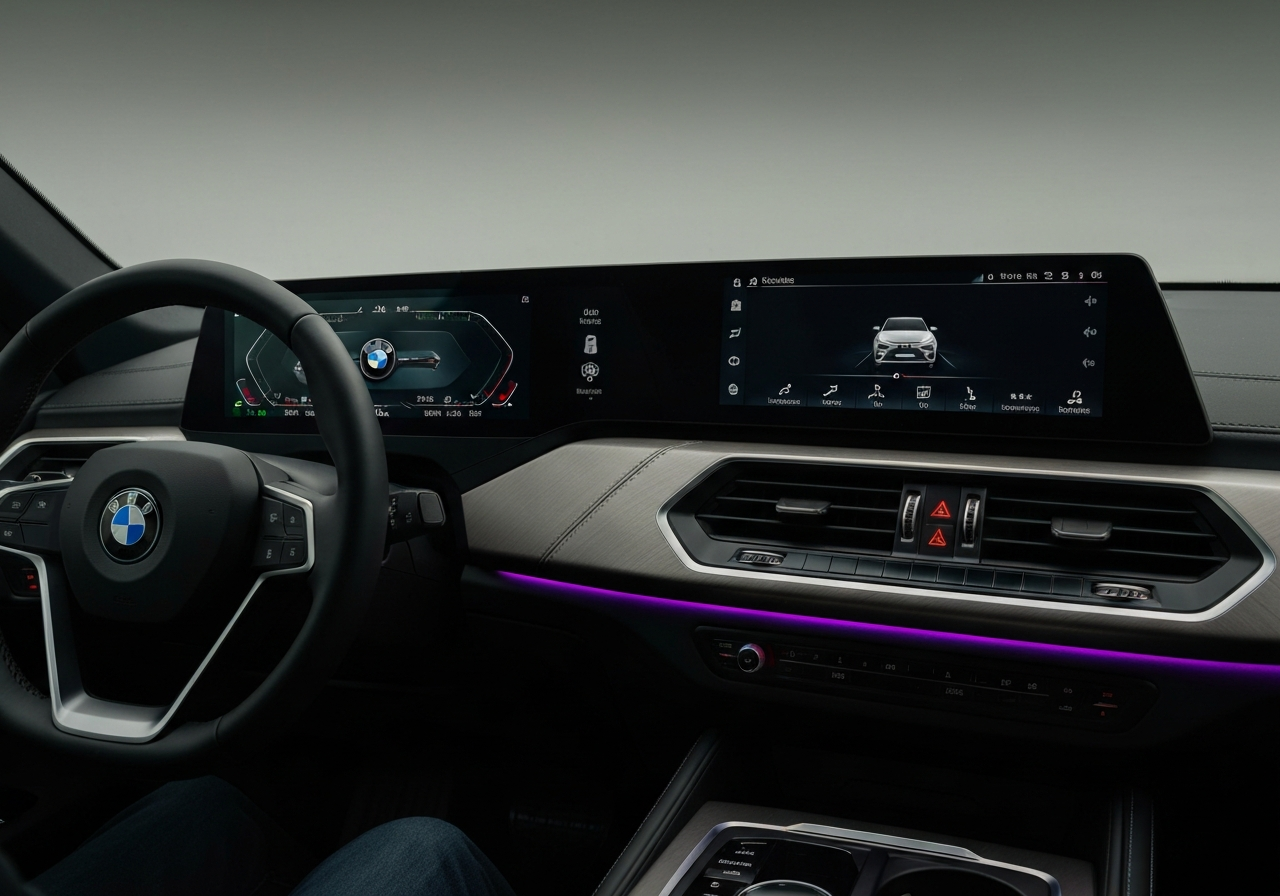
One of our pet peeves is climbing into an unfamiliar car and finding that nothing is where it should be — the layout fights you, simple tasks take three taps, and you spend the whole drive hunting for the defroster. When you're buying used, the dashboard matters even more, because it's doing double duty: it tells you how livable the car will be every single day, and it quietly reveals how the previous owner treated it. Learn to read both, and you'll spot a great used car — or dodge a bad one — before you ever sign.
Why the dashboard deserves a close look on a used car
On a new car, the dashboard is purely a usability question. On a used car, it's also a condition report. Worn buttons, a cracked screen, a warning light that "just needs resetting," or an aftermarket stereo wired in by hand can all tell you more about a vehicle's history than the seller will. The dashboard is the part of the car you interact with constantly, so it shows its age honestly — if you know what to look at.
Physical buttons vs. touchscreen: favor what you can use without looking
The industry spent a decade moving every control onto a touchscreen, and many drivers found out the hard way that burying climate and volume in a menu is a genuine distraction. The best dashboards keep the things you adjust while driving — temperature, fan, volume, hazard lights, defrost — as physical knobs and buttons you can find by feel.
When you evaluate a used car, ask yourself: can I change the cabin temperature without taking my eyes off the road? Can I mute the audio with one tap? A beautiful glass dashboard that forces you to dig through submenus at 70 mph isn't a feature; it's a daily annoyance you'll pay for in attention. Favor a layout you can operate blind.
The instrument cluster: readable at a glance, in any light
Your speed, fuel, and warning indicators should be instantly legible — day or night, in direct sun or pitch dark. Sit in the driver's seat and check that the cluster is easy to read at a glance, that the brightness adjusts properly, and that a digital display (if fitted) isn't washed out or laggy.
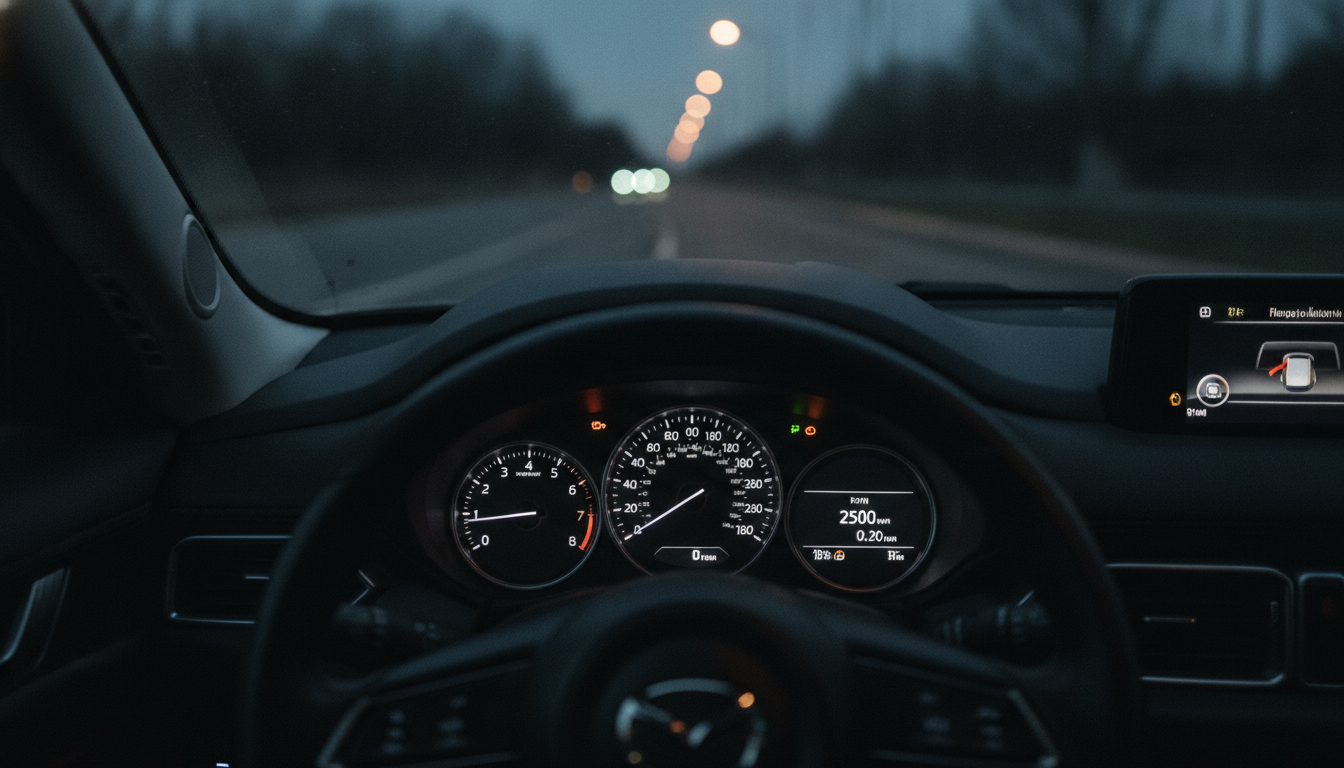
On a used car, a dim, flickering, or partially dead cluster is a red flag. Dead pixels in a digital display, segments that don't light up, or a backlight that's failing are repairs that can run into real money on modern vehicles. Cycle the ignition and watch the cluster wake up — everything should illuminate cleanly.
Run the warning-light "bulb check" at startup
When you turn the key (or push start) without firing the engine, the dashboard should briefly light up all its warning symbols — that's the self-test. Then, once the engine is running, they should go out. This 10-second ritual is one of the most revealing checks you can do.
Two problems to watch for. First, a light that stays on after start — check engine, airbag, ABS, traction control — means an active fault you'll need diagnosed before you trust the car. Second, and more sinister, a warning light that never appears at all during the bulb check can mean someone removed the bulb or disabled the indicator to hide a problem. A missing airbag light is a classic trick to mask a deployed or disconnected airbag system. No light is sometimes worse than a lit one.
Test the infotainment system thoroughly — not casually
The central screen is the most expensive single component on many dashboards, so make it earn your trust. Don't just tap the home screen; actually use it.
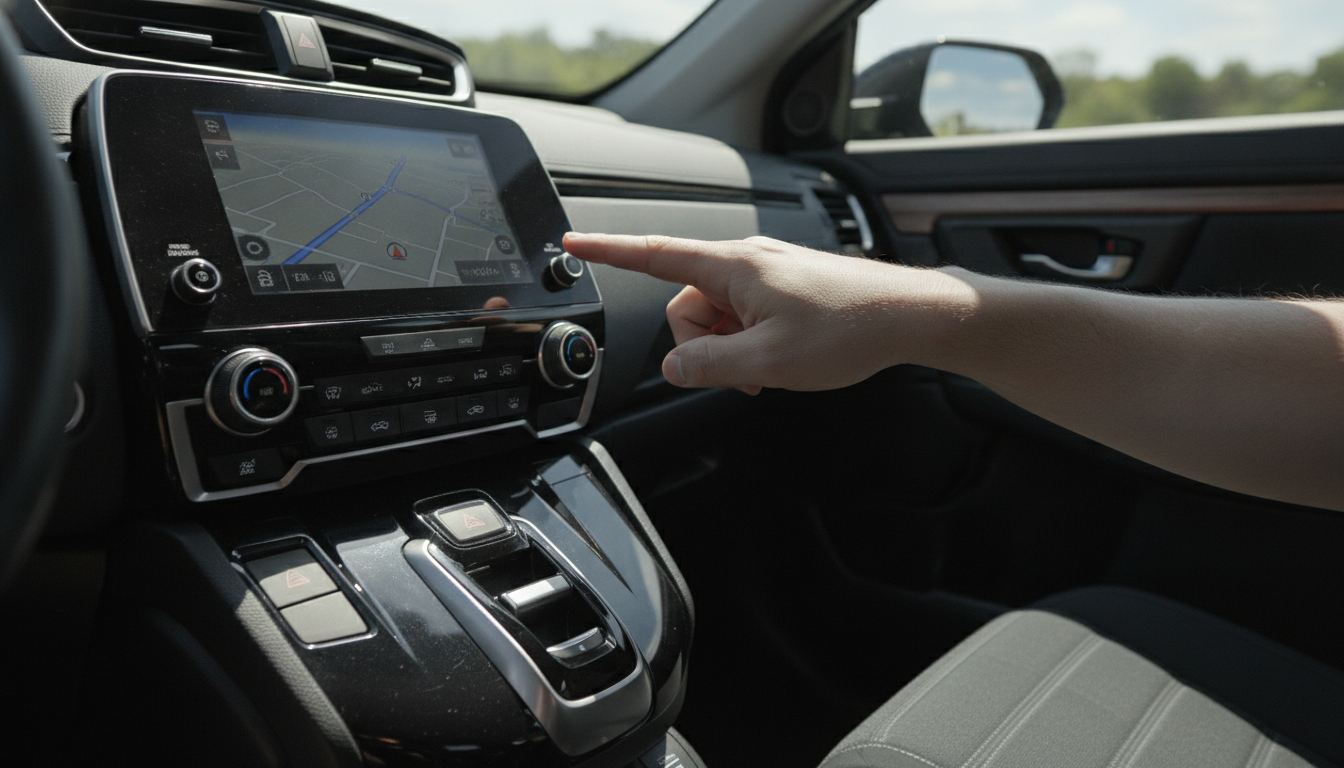
Check that the touchscreen responds quickly and accurately across the whole surface (drag a map around to find dead zones). Test the backup camera for a clear, undistorted image. Pair your phone over Bluetooth, confirm Apple CarPlay or Android Auto connects, and verify each USB port charges and transfers data. Play audio through every speaker to catch a blown one. A glitchy, slow, or half-working head unit is both a daily frustration and a pricey fix.
Climate controls: every button, both extremes
Run the air conditioning until it blows genuinely cold, then the heat until it blows hot. Cycle through every fan speed and each vent mode. On dual-zone systems, confirm both sides work independently. Air conditioning repairs — a failed compressor, a leaking system — are among the more expensive surprises on a used car, and a quick test now saves a hot, expensive summer later.
Read the wear: does the dashboard match the odometer?
This is where the dashboard becomes a lie detector. A car showing low miles should have a lightly used interior. If the steering wheel is shiny and worn smooth, the buttons have lost their lettering, the gear selector is polished from thousands of shifts, or the driver's seat bolster is collapsed — but the odometer reads low — something doesn't add up. Heavy interior wear paired with low indicated mileage is a strong hint of odometer tampering, and your cue to pull the vehicle history report and walk if it doesn't reconcile.
Look for cracks, peeling trim, and dead pixels
Sun and time are hard on dashboards. Look for cracking on the dash top (common on cars that lived in hot climates), peeling or sticky soft-touch coatings, lifting trim, and rattles when you tap around. None of these are necessarily deal-breakers, but they're bargaining chips — and a cracked dash or a screen with dead pixels signals a car that wasn't pampered.
Driver-assist and camera displays: confirm the tech actually works
Modern used cars often come with blind-spot monitoring, lane-keep assist, parking sensors, and 360-degree cameras — great features, but only if they function. Many of these systems display through the dashboard, so confirm the warnings illuminate, the sensors chime, and the camera views are sharp. A clouded or cracked camera lens, or a system throwing a fault, can be costly to restore.
Shop smarter, pay less
We'll find used cars worth your test drive.
Tell us your name and email and we'll send hand-picked used-car deals near you — so you spend your time inspecting winners, not duds.
Get Used-Car DealsConnectivity and the little things you'll use every day
The features that don't make the brochure are the ones you'll touch most: the 12-volt and USB outlets, wireless charging pad, the quality of the speakers, the responsiveness of the volume knob, the clarity of the voice controls. Spend two minutes confirming the basics charge, connect, and play. A dashboard that nails the everyday details quietly makes the car a pleasure to own.
Watch for an aftermarket head unit
A non-factory stereo isn't automatically bad, but it deserves scrutiny. Sometimes it's a harmless upgrade; other times it was installed to replace a factory unit that failed, or wired in sloppily in a way that drains the battery or disables steering-wheel controls and the backup camera. If the dashboard has an obviously aftermarket screen, ask why, check that all the original functions still work, and look for messy wiring behind it.
Sit in it like you own it
Finally, just spend a few minutes in the driver's seat as if it were already yours. Adjust the seat and mirrors, reach for the common controls, check the sightlines, and notice whether the layout feels intuitive or fights you. Ergonomics are deeply personal — a dashboard one driver loves, another finds maddening.
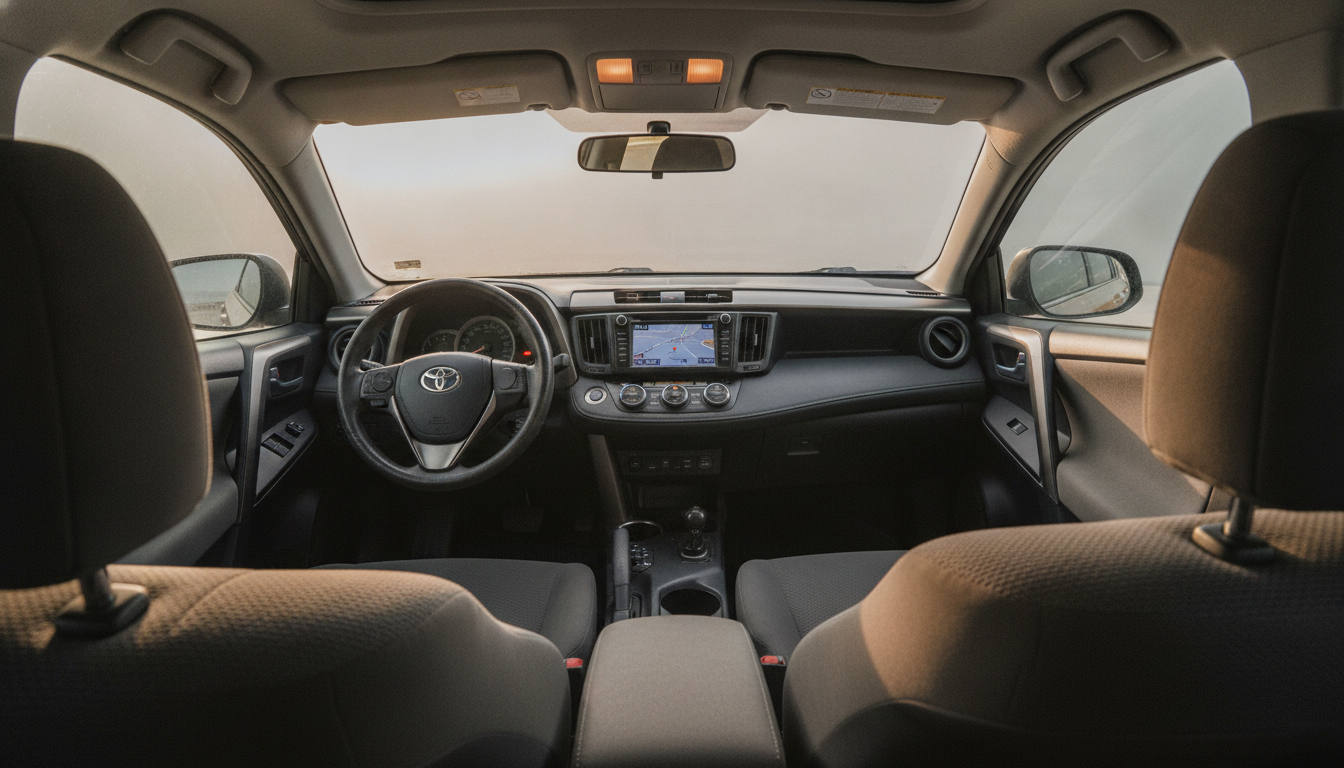
If everything is where you expect it, the materials have held up, and the tech all works, you've likely found a used car that was cared for. If the layout frustrates you in the showroom, it won't grow on you in traffic.
Don't skip the steering-wheel controls and stalks
The buttons on the steering wheel and the stalks behind it get used constantly, so they wear and fail more than people expect. Click through the audio, cruise-control, and phone buttons and confirm each one responds. Work the turn-signal and wiper stalks through every position, including the intermittent settings and the rear wiper if it's an SUV or hatchback. Sticky, unresponsive, or worn-blank wheel buttons are both an everyday irritation and another quiet clue about how many miles those thumbs really put on the car.
Take a night drive before you commit
Almost everyone shops for cars during the day, and that's a mistake when it comes to the dashboard. A cluster and infotainment screen that look perfect at noon can be a glare-filled, washed-out mess after dark — or so bright they're distracting. If you're serious about a car, try to drive it at night, or at least sit in it in a dark garage with the lights on.
Confirm the dashboard dimmer actually works across its range, that the screen has a proper night mode rather than blasting white light at you, and that the gauges stay crisp and readable. Check that the headlight and high-beam controls fall easily to hand, that the auto-dimming and any adaptive brightness behaves, and that there are no annoying reflections of the dash on the windshield. The cars that are a joy to drive at night were designed thoughtfully; the ones that aren't will wear on you every evening commute.
Mind the gauges that protect your wallet
Some of the most important things on the dashboard aren't flashy at all: the temperature gauge, the oil-pressure light, the battery indicator, and the tire-pressure monitoring system. On a used car, these are your early-warning system for the expensive stuff. Make sure the coolant temperature reads normally once warmed up (not creeping toward hot), that no oil or charging warnings linger, and that the TPMS isn't permanently lit — a stuck TPMS light can hide a failed sensor in each wheel, which adds up. A dashboard that monitors the car's health honestly is one that will save you money down the road.
Turn dashboard flaws into a lower price
Here's the part most buyers miss: every imperfection you find on the dashboard is a negotiating lever. A cracked screen, a non-working A.C., a dead speaker, peeling trim, or a faulty camera all have a real repair cost — and that cost should come off the price. Tally what it would take to put things right and bring those numbers to the table. Sellers expect a clean, fully working car to fetch top dollar; the moment you can point to specific, priced issues, the asking number starts to move.
This is exactly where doing your homework pays off. Buyers who know what a working dashboard should cost — and what it costs to fix a broken one — consistently pay less than buyers who shrug and accept the sticker. If you'd rather skip straight to vehicles that are priced right and well looked after, that's where we come in.
Dashboard red flags — quick checklist
- A warning light that stays on after the engine starts.
- A warning light (especially the airbag light) that never appears during the startup self-test.
- Heavy interior wear that doesn't match a low odometer reading.
- Dead pixels, a cracked screen, or a laggy, freezing infotainment system.
- A.C. that won't blow cold or heat that won't blow hot.
- An aftermarket head unit with messy wiring or disabled factory features.
The bottom line
A used car's dashboard rewards a careful eye. Spend ten focused minutes running the bulb check, exercising the infotainment and climate, and reading the wear against the odometer, and you'll know far more about the car — and the person who owned it — than any listing will tell you. The best used-car buyers aren't the ones who fall for a pretty screen; they're the ones who test everything and let the dashboard tell the truth.
Less hunting, better cars
Get matched with better used-car deals.
Share your name and email and we'll send curated, well-kept used cars near you — real listings, real prices, no lot pressure.
Get Used-Car Deals